Nov → April
Peak season
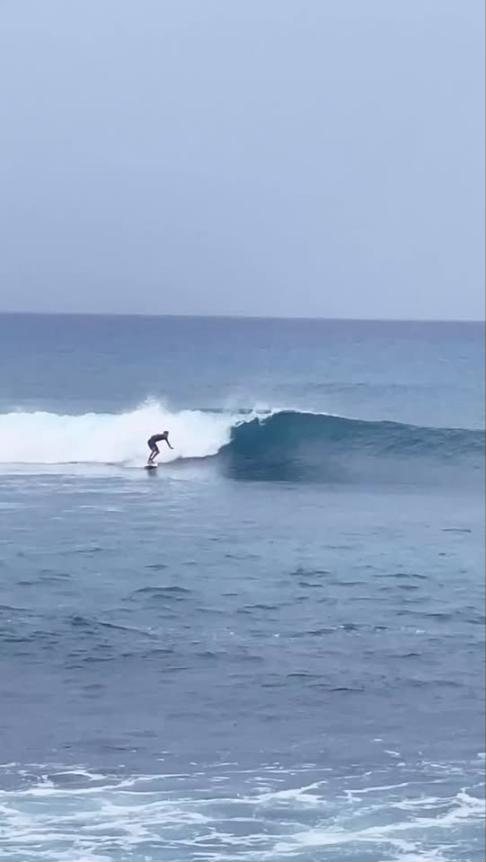
North Atlantic swells arrive regularly. Every spot works, including the reefs that only break in these conditions. This is the season of competitions and of the best sessions.
For whom: every level, each on the right spot.
Home / Spots & seasons
When to come, where to go and at what level: a guide to surfing in Guadeloupe, written by a school based in Port-Louis that is in the water all year round.
In short
The surf season in Guadeloupe runs from November to April, when North Atlantic low-pressure systems send swell to the coasts facing north and east.
The water sits between 26 and 29 °C all year round : no wetsuit is needed, a UV rash guard is plenty.
The archipelago has around ten rideable spots, spread between northern Grande-Terre, the Atlantic coast, southern Grande-Terre and Basse-Terre.
Several spots break over reef and are for experienced surfers only. Beginners should aim for sandy bottoms.
The hurricane season runs from 1 June to 30 November, when swell can build very fast and turn dangerous.
When to surf
Contrary to a widespread belief, you can surf in Guadeloupe all year. What changes is the size of the waves and the number of rideable days.
Nov → April
North Atlantic swells arrive regularly. Every spot works, including the reefs that only break in these conditions. This is the season of competitions and of the best sessions.
For whom: every level, each on the right spot.
May → June
The swell weakens and comes less often. Waves stay regular on the most exposed spots, but get smaller and gentler.
For whom: an excellent time to start.
July → Oct
Little swell most of the time, and often a flat sea. This is paddleboard and mangrove season. A word of caution: it is also hurricane season, when a distant storm can raise a heavy swell within hours.
For whom: beginners, families, paddleboarding.
Within a single day, everything comes down to tide and wind. The trade wind usually picks up during the morning, so early sessions are generally the cleanest.
Where to surf
The levels given assume normal seasonal conditions. A beginner spot can become unrideable on a big swell, and the reverse is true too.
| Spot | Town | Bottom | Level |
|---|---|---|---|
| Plage du Souffleur | Port-Louis | Sand | Beginner to intermediate |
| Plage de la Chapelle | Anse-Bertrand | Sand and rock | Intermediate to advanced |
| Pointe de la Grande Vigie | Anse-Bertrand | Reef | Advanced, strong currents |
| Damencourt | Le Moule | Reef | Advanced |
| Anse Salabouelle | Le Moule | Reef | Intermediate to advanced |
| Le Helleux | Sainte-Anne | Mellow reef and sand | Beginner to intermediate |
| Anse Vinaigri | Le Gosier | Sand | Beginner to intermediate |
| Bananier | Capesterre-Belle-Eau | Black sand | Beginner |
| Cluny | Sainte-Rose | Sand | Advanced, strong currents |
Sources disagree on the level of several of these spots. If in doubt, ask a local school before paddling out.
By area
Port-Louis and Anse-Bertrand pick up north swells. Port-Louis offers several spots within the same town, with sandy bottoms and turquoise water: it is our base, and the best place on the island to learn. Further north, La Grande Vigie is expert territory, exposed and swept by currents.
Le Moule is the historic home of Guadeloupean surfing, with Damencourt and its hollow, fast reef waves, which host competitions. Getting in and out of the water is tricky: this is not a place to learn.
Between Sainte-Anne and Saint-François, Le Helleux works on south and south-east swells, with a long left that is often within reach of beginners. Further west, Le Gosier has more sheltered beaches, including Anse Vinaigri where we sometimes take our students.
The leeward coast, more sheltered. Bananier, with its volcanic black sand, is the beginner spot of the area; Cluny, to the north, is for experienced surfers only because of the current.
The equipment
Rather than flying with your board, you can rent one in Port-Louis.
Safety
The simplest rule: ask first. A local school will tell you in thirty seconds whether today's spot is for you.
Where we fit in
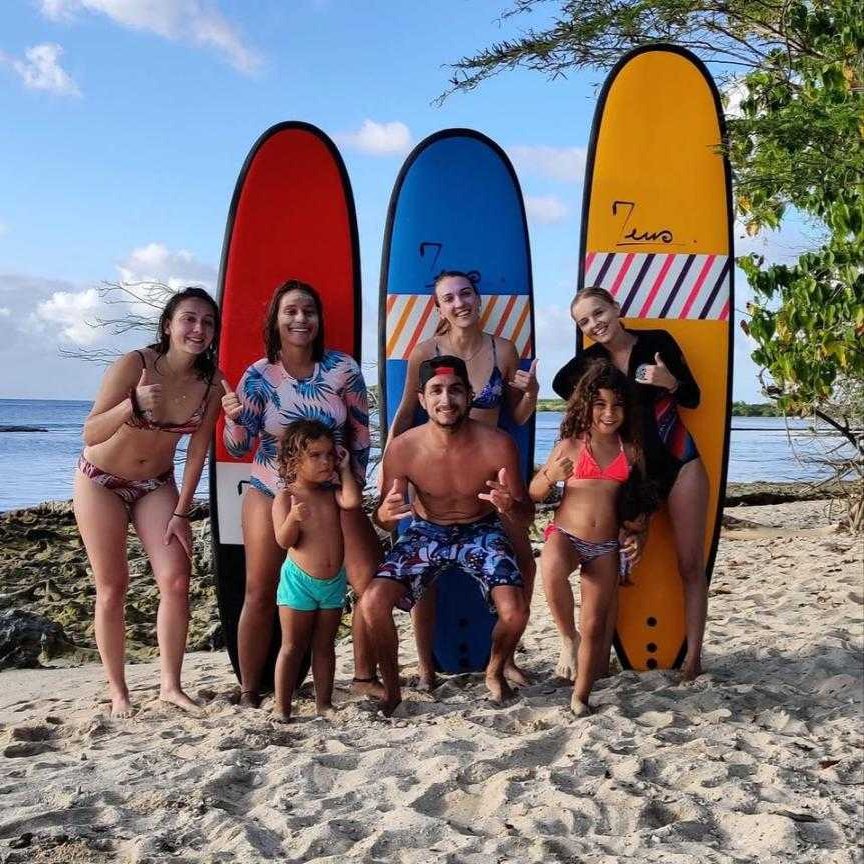
Passion Surf Guadeloupe is the island's only school accredited by the French Surfing Federation. Our lessons run mainly in Port-Louis, and depending on conditions at Anse-Bertrand or Anse Vinaigri, in Le Gosier.
If you are starting out, a 90-minute beginner lesson will save you a whole day of trial and error. If you already surf, we will tell you where to go, and we can rent you a board.
FAQ
A question that isn't here? Message us, we know the area well.
November to April. That is when North Atlantic low-pressure systems send regular swell to the exposed coasts. To learn, however, May and June offer gentler, easier waves.
Yes, but waves are rare and small from July to October. It is a good time for a beginner lesson or for paddleboarding. It is also hurricane season: swell can build abruptly, so check before paddling out.
No. The water stays between 26 and 29 °C all year. A rash guard or UV shirt is enough, mainly to protect you from the sun and from board rash.
Sandy bottoms, and beaches where the waves break well out from the shore. Port-Louis, in northern Grande-Terre, has both: that is where we teach. Bananier in Basse-Terre and Le Helleux in Sainte-Anne also have a reputation for being accessible.
No more than anywhere else, provided you pick a spot that matches your level. The main trap is reef, found on several spots including Damencourt at Le Moule. Currents and sun are the other risks worth taking seriously.
Shark attacks are extremely rare in the archipelago and are not something local surfers worry about. Reef, currents and sea urchins are what deserve your attention.
We rent boards by the day in Port-Louis. If you have never surfed, the board is included in the price of the lesson.
Surf lessons in Port-Louis all year round, for complete beginners and for surfers looking to improve.